The research at the Soft Robotics lab focuses on two main challenges
Research @ Soft Robotics
The research at Soft Robotics lab focuses on two main challenges...
Development of Technological Solutions for Soft Robots
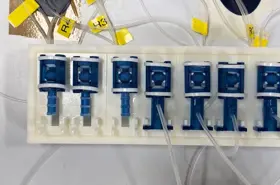
Soft robots require soft sensors and actuators that can be embedded into the robot body without adding kinematic constraints and rigidity. In particular soft sensors should have the advantageous properties of transparency, high sensitivity, high flexibility, stretch ability, cover a large-area and be low-cost. Soft actuators should exhibit the shape and rigid tuneable properties of natural muscles. Furthermore, a system level approach in the design and integration, is required to reduce system complexity and computational overload on the robot control. New technological solutions and fabrication techniques will be investigated for the development of such sensors and actuators.
Exploring and Exploiting “Softness” for robots’ intelligent behaviour
Soft structures have infinite degrees of freedom and are inherently complex due to material non-linearity making classical control strategies difficult to use. Indeed, in the majority of industrial robots and classical robot design, these properties are suppressed because they interfere with modelling and control. This complexity, seen as a limitation in classic control approaches, can be instead exploited in soft robotics to achieve more robust, faster and potentially, more energy efficient robots.
Intelligent design of Soft Robots provided with Inhomogeneous mechanical structures and soft sensors will be explored for accomplishing challenging tasks for classical robots.
Research Themes
-
Task-driven co-design of body and control for soft robots
Exploring optimization and learning-based approaches for the joint evolution of morphology and control. -
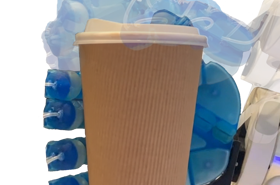
Soft hands for manipulation
Design and control of compliant hands integrating tactile sensing for adaptive grasping and manipulation. -
Soft and modular robotic arms in cluttered environments
Control strategies combining proprioception, vision, and touch for robust interaction. -
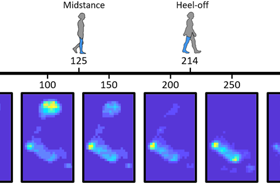
Soft artificial skin and tactile sensing
Bio-inspired tactile sensing systems for distributed force, texture perception, and contact-rich tasks. -
Proxi-tactile sensing for human-aware manipulation
Combining proximity and tactile sensing to enable safe interaction in industrial settings. -
Soft systems for patient simulators
Design and manufacturing of lifelike, sensorized soft-tissue systems for medical and surgical training. -
Bio-inspired soft systems for sustainability challenges
Collaborations with biologists to develop nature-inspired soft robotic systems addressing sustainability goals. -
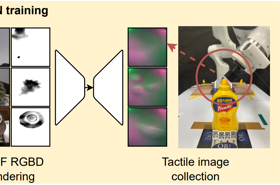
Tactile simulation and world models
Simulation environments and predictive models for learning and reasoning about touch.